Published by Swift Restoration | Local Water Damage Restoration Specialists
When heavy storm runoff or seasonal downpours strike the East Bay, sudden flooding can compromise your home within minutes. For homeowners across Walnut Creek, Pleasant Hill, and Lafayette, stormwater intrusion often settles into carpeted family rooms, hallways, and finished basements. While pulling up a soaked rug might seem sufficient, professional water mitigation requires far more thorough deconstruction to prevent severe structural decay and hazardous mold growth.
The Hidden Danger: Why Surface Drying Fails
Floodwater originating from severe storms is rarely clean. It brings silt, runoff contaminants, and soil microbes directly across your subfloor. Even when a carpet’s surface feels merely damp after running basic fans, the layers underneath tell a completely different story. Trapped moisture quickly turns subflooring into an active incubator for microbial growth within 24 to 48 hours.
1. Carpet Padding Acts Like a Toxic Sponge
Carpet padding (bonded polyurethane foam) is engineered for cushioning, meaning it is full of open-cell pores designed to hold air. When flooded, it acts like a massive sponge:
- Trapped Moisture: Pad foam holds immense volumes of water directly against wooden subfloors or concrete slabs.
- Structural Degradation: Once saturated with floodwater, the pad breaks down, loses rebound capability, and cannot be completely sanitized or restored to sanitary living standards.
- Vapor Barrier Trapping: Many carpet pads feature plastic spill-guard backings. This barrier prevents ambient evaporation, sealing stagnant water against the slab or floor joists.
2. Tack Strips: The Overlooked Rot and Tetanus Hazard
Tack strips (the wooden slats lined with sharp angled nails along the perimeter) are often left behind by inexperienced cleaners, creating substantial long-term risks:
- Untreated Plywood Decay: Standard tack strips are made of thin, untreated plywood. Moisture softens this wood almost immediately, causing delamination, rot, and permanent loss of grip.
- Rusted Fasteners: The steel nails driving through the strip rust quickly in stagnant moisture, bleeding rust stains into the perimeter and failing to anchor future installations.
- Mold Reservoirs: The narrow gap between the tack strip and drywall collects damp organic debris, serving as an ideal staging ground for mold colonies.
3. Baseboards and Drywall: The Wicking Highway
Water does not stay horizontal; capillary action forces moisture upwards into surrounding walls via the baseboard and lower drywall boundary.
- Trapped Wall Cavity Moisture: Saturated wood or MDF baseboards seal moisture directly into the wall cavity, hiding soaked insulation and damp wall studs.
- MDF Swelling: Composite baseboards swell, warp, and crumble when exposed to storm runoff, making salvaging them impossible.
- Airflow Clearance: Removing the baseboard allows restoration professionals to perform targeted structural drying (placing directed airflow directly into wall cavities behind baseplate framing).
East Bay Flooding: Unique Risks in Walnut Creek, Pleasant Hill, and Lafayette
Neighborhoods throughout central Contra Costa County feature unique architectural profiles—from mid-century slab foundations in Pleasant Hill to custom hillside residences throughout Lafayette and Walnut Creek. Hillside runoff, saturated clay soils, and backed-up drainage channels frequently channel storm surges toward ground-level foundations.
Without immediate containment, flood-damaged building materials pose significant health hazards, aggravate respiratory sensitivities, and can trigger substantial property devaluations.
The Swift Restoration Structural Remediation Process
Our comprehensive emergency response follows rigorous IICRC standards to protect your home’s structural integrity:
- Thermal Moisture Mapping: We deploy infrared imaging and deep-penetrating moisture meters to trace every migration path of water behind baseboards and under floor coverings.
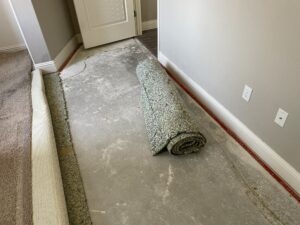
- Targeted Extraction & Demolition: We cut and roll out contaminated carpets, strip unsalvageable padding, and pull up degraded tack strips and swollen trim down to the raw slab or subfloor.
- Antimicrobial Decontamination: Concrete and subfloor surfaces are treated with hospital-grade antimicrobial solutions to stop mold spores and bacteria in their tracks.
- Industrial Dehumidification: Heavy-duty desiccant dehumidifiers and commercial air movers dry the remaining studs, subfloor, and wall assemblies down to dry-standard benchmarks.
Dealing with Storm Runoff or Flood Water in Central Contra Costa?
Do not wait for hidden moisture to turn into structural mold. Swift Restoration provides immediate emergency water extraction and remediation across Walnut Creek, Pleasant Hill, and Lafayette.
Call Swift Restoration today for rapid dispatch and certified moisture assessment.